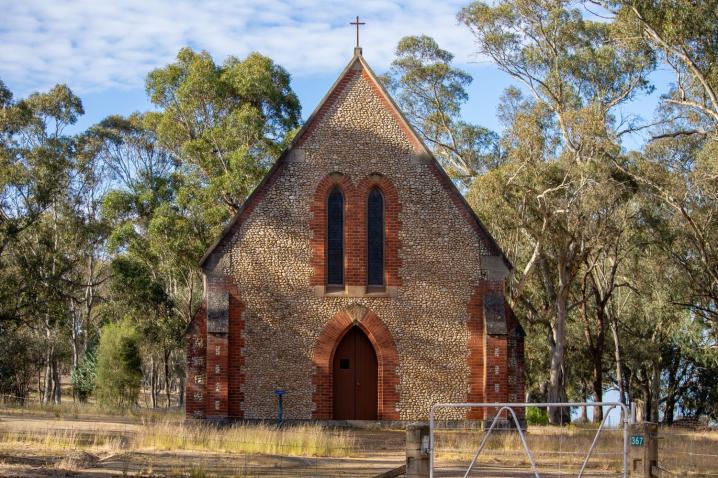
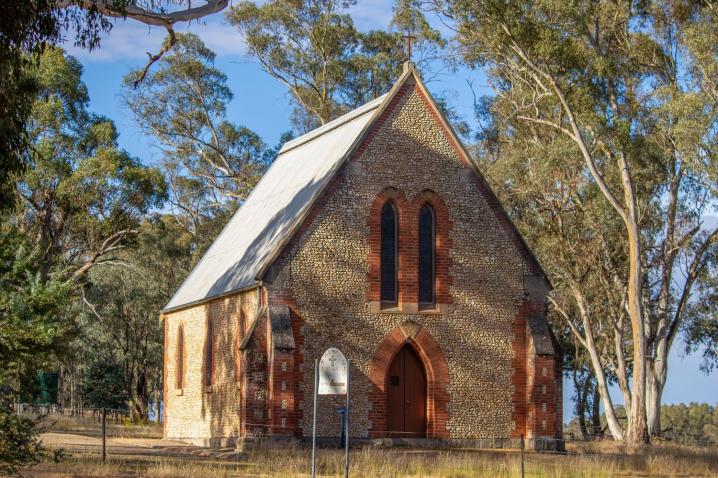
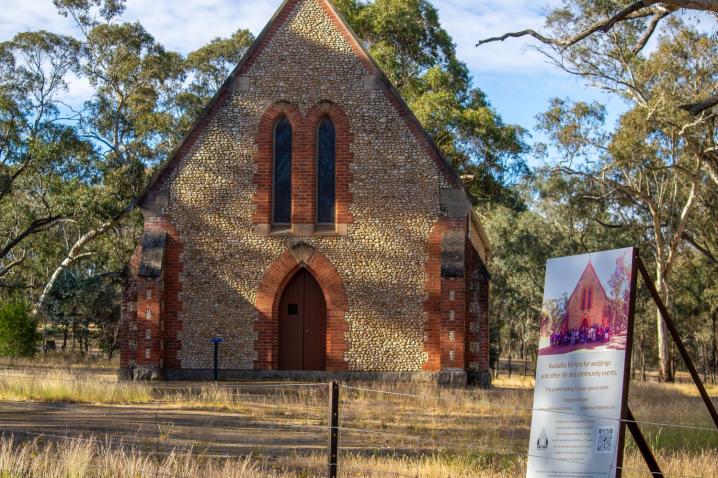
This striking, unique church is set in a quiet locality between Dunolly and St Arnaud, and is an interesting road-side attraction for travelers to stop and admire.
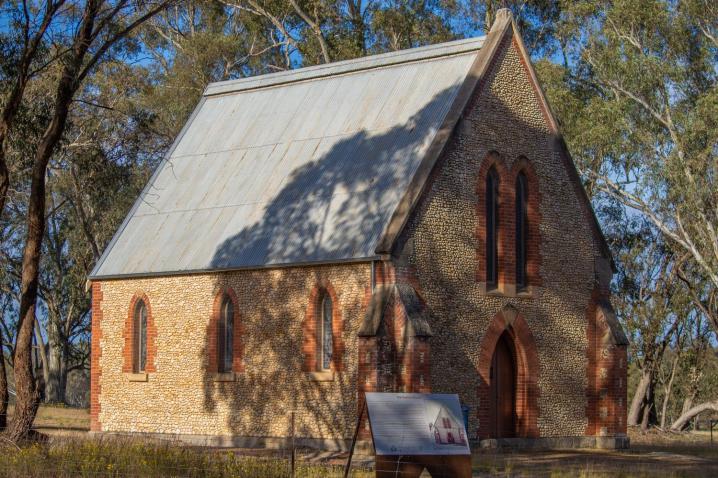
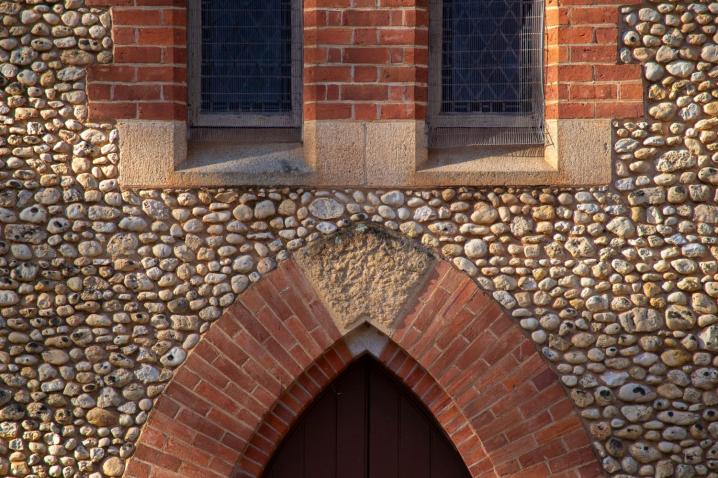
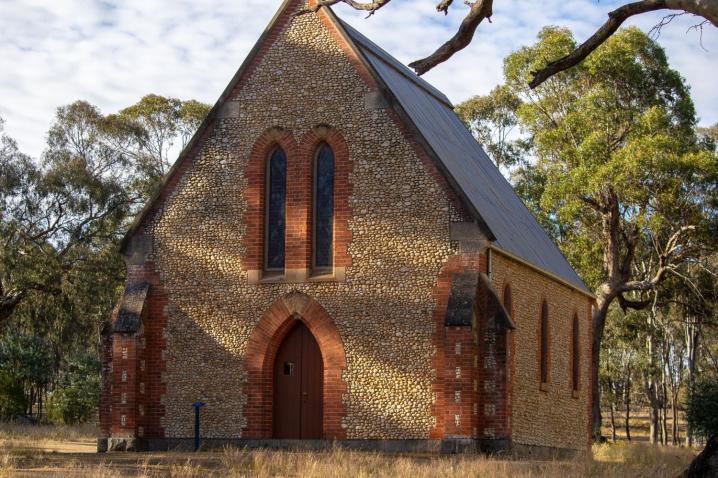
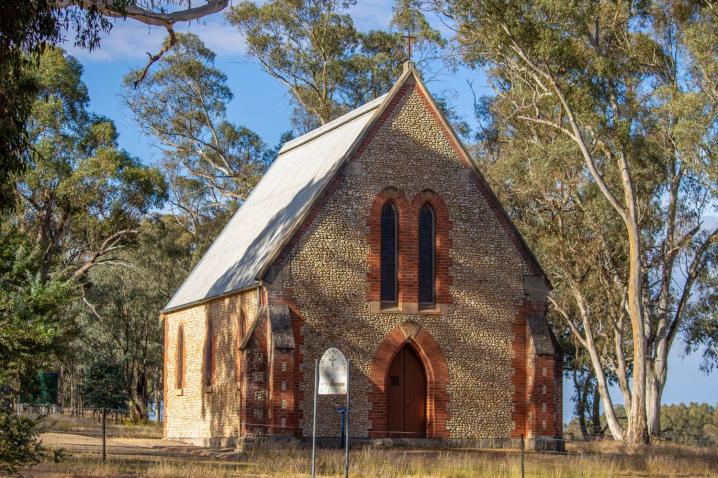
Built way back in 1869, the church was largely constructed using river rocks, which were collected by miners and their families in wheelbarrows from the diggings nearby.
Carapooee was originally called Peters Diggings by the mining community which thrived here, named after the owner of the nearby Strathfillen Station, and was renamed Carapooee in the 1870s. The pebble church is the only building remaining from that early community.
This interesting road-side stop is accompanied by a picnic table and informative signs.
How to get to the pebble church
The Pebble Church is located about 13km south of St Arnaud on the Dunolly Road, Carapooee.
Interesting construction of the pebble church
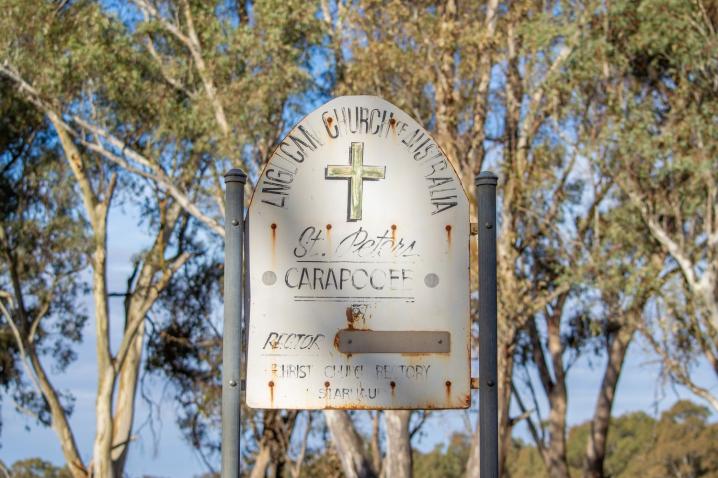
The St Peter's Anglican Church was built in 1869-70, designed by Melbourne architect Leonard Terry, who was the diocesan architect for the Anglican Church. The contractors for the job were Phil Crone and Henry Edwards from nearby St Arnaud.
Locals assisted with the construction, gather white quartzite cobbles from the opposite hill and carting them to the site, reducing overall costs of the project.
The church opened for worship on Sunday 10th July, 1870, before the interior was finished, using borrowed seating placed directly on the ground inside the building.
History of the pebble church
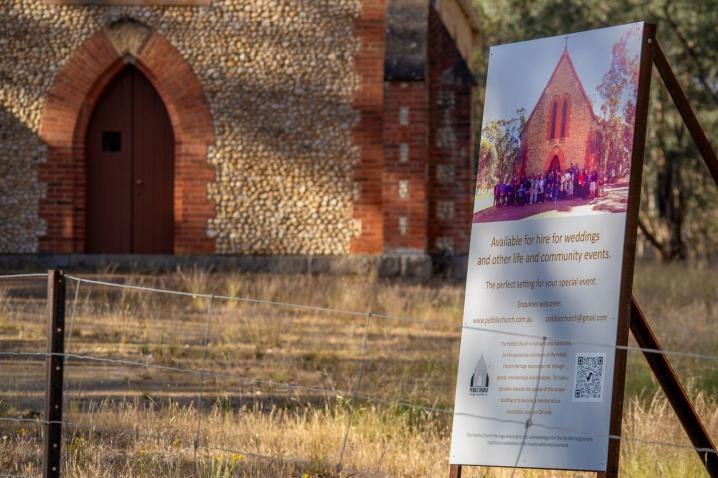
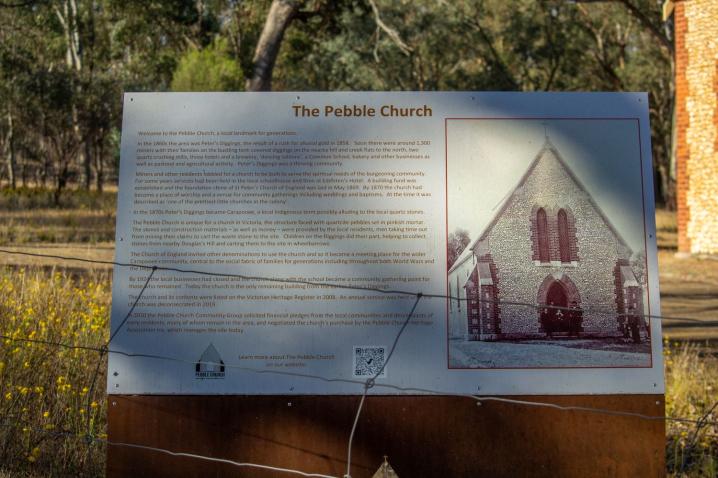
An information sign displays the following text:
The Pebble Church
Welcome to the Pebble Church, a local landmark for generations.
In the 1860s the area was Peter's Diggings, the result of a rush for alluvial gold in 1858. Soon there were around 1,300 miners with their families on the bustling tent-covered diggings on the nearby hill and creek flats to the north, two quartz crushing mills, three hotels and a brewery, 'dancing saloons', a Common School, bakery, and other businesses as well as pastoral and agricultural activity. Peter's diggings was a thriving community.
Miners and other residents lobbied for a church to be built to serve the spiritual needs of the burgeoning community. For some years services had been held in the local schoolhouse and then at Edelsten's Hotel. A building fund was established and the foundation stone of St Peter's Church of England was laid in May 1869. By 1870 the church had become a place of worship and a venue for community gatherings including weddings and baptisms. At the time it was described as 'one of the prettiest little churches in the colony'.
In the 1870s Peter's Diggings became Carapooee, a local indigenous term possibly alluding to the local quartz stones.
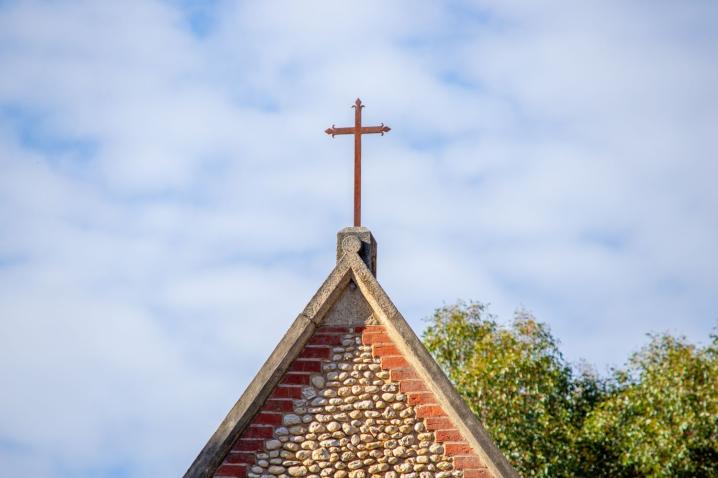
The Pebble Church is unique for a church in Victoria, the structure faced with quartzite pebbles set in pinkish mortar. The stones and construction materials - as well as money - were provided by the local residents, men taking time out from mining their claims to cart the waste stone to the site. Children on the Diggings did their part, helping to collect stones from nearby Douglas's Hill and carting them to the site in wheelbarrows.
The Church of England invited other denominations to use the church and so it became a meeting place for the wider Carapooee community, central to the social fabric of families for generations including throughout both World Wars and the Depression.
By 1924 the local businesses had closed and the church along with the school became a community gathering point for those who remained. Today the church is the only remaining building from the earlier Peter's Diggings.
The church and its contents were listed on the Victorian Heritage Register in 2008. An annual service was held until the church was deconsecrated in 2019.
In 2020 the Pebble Church Community Group solicited financial pledges from the local communities and descendants of early residents, many of whom remain in the area, and negotiated the church's purchase by the Pebble Church Heritage Association Inc. which manages the site today.


 BBQ
BBQ Carapooee